Professor Hu Min, a renowned education expert, has been appointed Adjunct Professor of the Academy for Educational Development and Innovation (AEDI) at The Education University of Hong Kong (EdUHK), effective from the current academic year.
Professor Hu is the Chairman of New Channel International Education Group and holds several prestigious academic positions, including Member of the National Steering Committee for Professional Degree Education in International Chinese Language Education, and Deputy Director of the Academic Advisory Committee of the Regional Education Innovation Research Branch of the Chinese Society of Education. He also serves as an off-campus supervisor for the Master’s programme in Teaching Chinese to Speakers of Other Languages at Peking University and a Researcher at the Institute of Sinology at Waseda University. As the founder of the “reporting China in English” initiative, Professor Hu has dedicated years to integrating Eastern and Western educational philosophies to nurture talents with global competence.
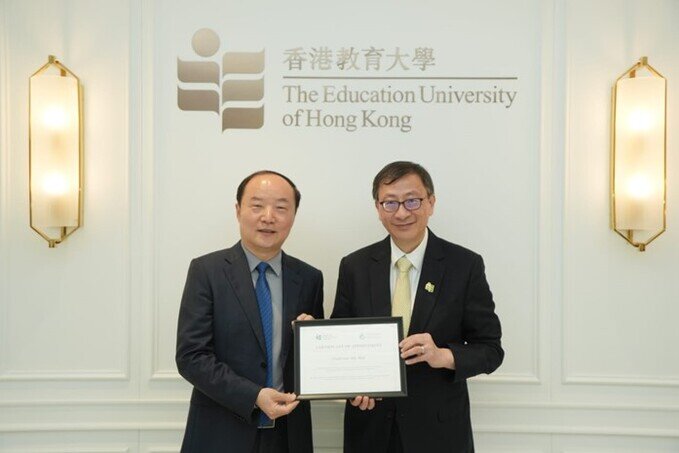
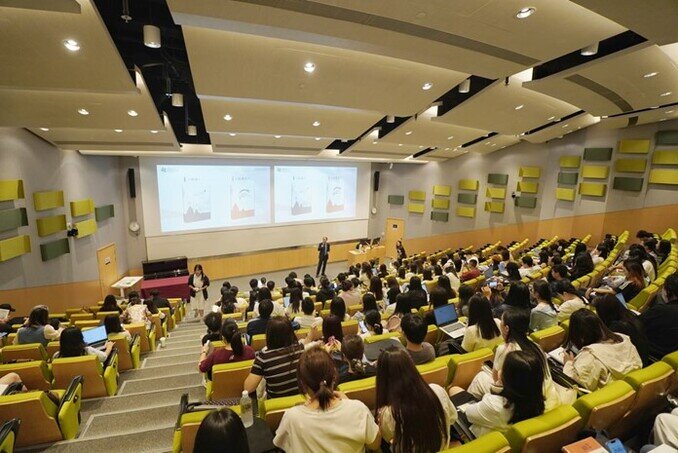
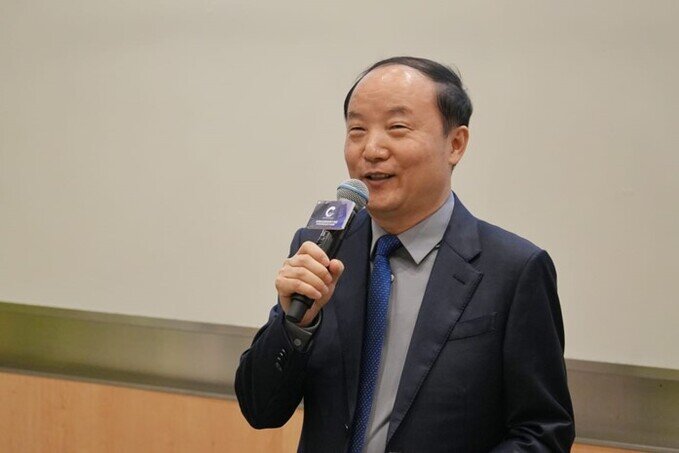
On 28 April 2026, Professor John Lee Chi-Kin, Director of the Academy for Educational Development and Innovation (AEDI), presented the certificate of appointment to Professor Hu. Following the ceremony, Professor Hu was invited to deliver a lecture to students titled “Chinese Value-Based Leadership: From Traditional Wisdom to Modern Leadership”.
Grounded in Eastern Philosophy: Addressing Modern Management Challenges
In the face of rapid technological advancements and the ubiquity of Artificial Intelligence (AI), Professor Hu Min emphasized during the course that the Tao (the Way) of a manager has become increasingly precious. “Technology determines how fast we run, but values determine where we run”, he stated. By deeply interpreting the essence of the Analects of Confucius and the Tao Te Ching, Professor Hu constructed a leadership framework with a “Chinese foundation” for modern educational administrators.
The curriculum is structured around the five dimensions of “Benevolence, Righteousness, Propriety, Wisdom, and Trustworthiness”:
- Benevolence (Ren) – Student-Centricity: Emphasizing that educational management should "nourish" all things like water, rather than being a top-down imposition, thereby practicing the philosophy of "teaching according to the student’s ability."
- Righteousness (Yi) – Creating Unique Value: Encouraging leaders to remain true to their original intentions during adversity and transcend short-term interests. By adopting the spirit of Wu Wei (effortless action), leaders empower teams as “gardeners” rather than “commanders”.
- Propriety (Li) – Establishing Warm Governance: Advocating for leading by example and emphasizing the power of listening and understanding. Sitting beside colleagues is far more effective than standing across from them.
- Wisdom (Zhi) – Grasping Essential Laws: In the AI era, leaders should focus on “the logic behind technology rather than the technology itself”, maintaining a data-driven yet people-oriented approach.
- Trustworthiness (Xin) – Building Integrity and Trust: Grounded in integrity and the practice of “Wei Er Bu Shi” (acting without claiming credit), this dimension fosters a transparent management style and a campus culture of consistency in word and deed.
Commitment through Action: Achieving Excellence in Educational Leadership
In his closing remarks, Professor Hu shared his heartfelt vision, urging EdUHK students to be “lamp-lighters” rather than “whistle-blowers”, and to choose to be “clumsy altruists” over “sophisticated egoists”. He noted that virtue is not found in lofty ideals but in the choices made during every decision; accountability lies in being “personally invested” (Gong Shen Ru Ju) in the ordinary days of service.
EdUHK has long been committed to driving educational innovation and upholding the values of Chinese culture. With his extensive experience in the field, Professor Hu’s “Chinese Value-Based Leadership” system successfully integrates traditional wisdom with modern management standards, such as the 4R Personalized Learning Approach. This appointment and the subsequent lectures not only deepen the understanding of value-based leadership among EdUHK faculty and students but also reflect the University's resolve to nurture education professionals with global competence and profound cultural roots in the AI era.